Showing posts with label Kathleen Tolan. Show all posts

Thursday, September 12, 2013

Conferring with Readers

During the Reading Institute last month,  I learned some new ways to look at conferring with readers.

Kathleen Tolen had this to share:  You need to prepare ahead of time, not just conferencing on the
Kathleen Tolan
fly.  Keep notes and follow up on something they were struggling with, look at artifacts (post its) in what they are currently reading ahead of time, study data on this child, have the child tour you through the work they are doing with their reading.  Find a way to lift their thinking a level.  There are lots of ways a mini lesson is a lot like a conference.
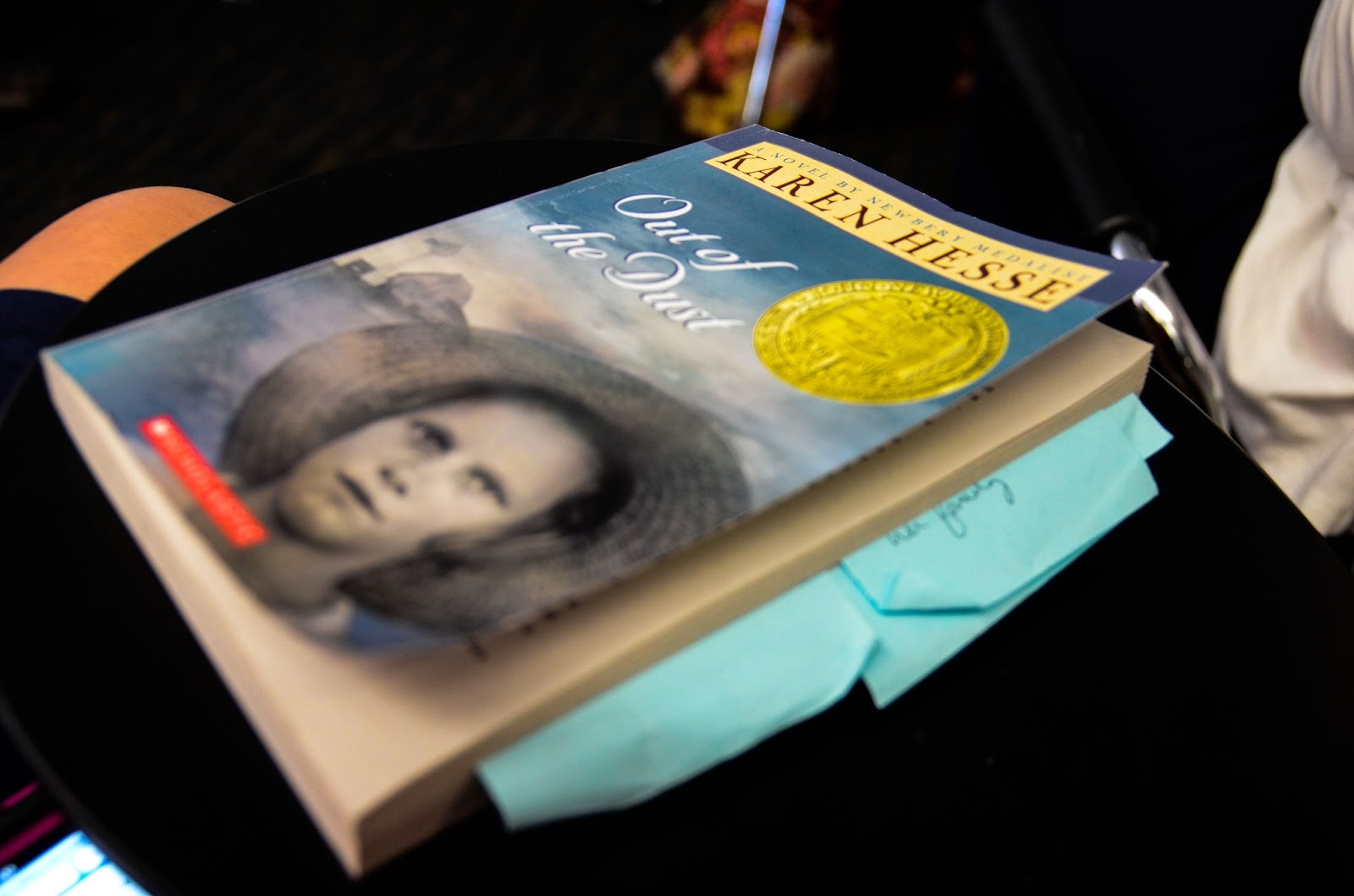
What do you do in a conference if you don’t know the kid’s books?  Try to read as many books in your classroom as you can.  If you have a series and you read one you will have an idea about the others. In the beginning of the year have the books out in your libraries that you know.  Also, at certain levels there is a way the story goes basically.  We are holding kids too accountable for comprehending everything.  Do you comprehend every single thing you read in a book or every single part of a movie?  Sometimes when you are just enjoying something you don’t comprehend everything.  It’s ok.  Also, don’t hold a child to the accountability level of comprehension that you have.  An 8 year old will comprehend something differently than an adult.  Tour their post its in their book of stop and jots.  Pick a portion and have them read it to you.  You need to hear your kids read aloud to you at times you aren’t assessing.  If a child is reading a non-fiction text then you can look at questions they may have and say:  I see you have a lot of questions about alligators.  You can take these question post its and put them on the cover of your next alligator book and see if you find the answers to your questions there.  USE post its.  Their work will be better.

The important thing to do at the end of a conference is to leave a LINK.  Just like you do in a mini lesson.  What will the student do when you leave them on their own.  In a mini lesson you end with a link and that is how they go into work session. In a teacher/student conference you end your conversation with what they should do or where they should go next with their reading.  (Not necessarily an “assignment”, but more like a habit or action)  You should see evidence that the student is interpreting their reading.  Noticing, comparing and all reading strategies get them there but their goal is to interpret their reading. 

One thing that is important for us is to have reflection time about what we need to get better at when conferring.  Breaking habits is hard so you have to put it in the forefront of your mind.  You need to “hear” what you are saying after it is over.  Audio record your next conference with the student.  This is easy to do with a smarthphone!  Continue doing it until you are doing what you want.  Kathleen did this for weeks and realized she was doing too much of the talking and not enough of the listening.  At first she put a sticky note on her clipboard that said “Shut Up” until a student saw it and asked her why she had that written down.  So she ended up telling the class was she working hard on being a better listener than talker.  They all decided to have a code sign for Ms. Tolan is talking too much which was rubbing their nose with one finger.  It really helped her.  Finally one day after a conference a student said, “Good job!” and she said, “Oh, good, I taught you something?”  and she said, “No, good job not talking too much!”  LOL

A reflecting conference shows how your work is improving or maybe they are in a place they need to reflect and see why things are growing and improving.  The kids need to be involved in the learning.  Let them reflect and SEE what their next step forward will be. 
fly.   Keep notes and follow up on something they were struggling with, look at artifacts (post its) in what they are currently reading ahead of time, study data on this child, have the child tour you through the work they are doing with their reading.  Find a way to lift their thinking a level.  There are lots of ways a mini lesson is a lot like a conference.

Alexis Czeterko, staff developer for TCRWP,  had us reading chapter books and jotting our thoughts throughout so that she could model conferring with us.  
Can I just say this freaked me out?!?  What would she think when she read my thinking as a reader?  Was what I was writing "enough"?  Where should I stop and write? Wow, I wonder if this is how my students feel?  Well, the answer to that was probably no.  My students probably didn't worry about what I thought because I didn't spend much time reading their stop and jots or hold them accountable to deepening their thinking.  Hmmm....  I'm going to remember that.

Alexis Czeterko
Alexis shared these points to remember:

Architecture of a Conference
Research the reader
Decide
    what will you compliment?
    what will you teach?
    how will you teach it?
Give a compliment
Teach the reader something and have them try it
Rearticulate what you’ve taught and encourage the student to do this often as she or she reads (LINK)

Alexis says to look through the stop and jots of their independent book before your conference.  If you notice the jottings on post its are not connected in any way that can be ok but try to get the student to connect their thoughts.  Get a theory about the story or character and continue to see where your thinking changes. Help them make that connection the first time if they are struggling with it. 

Documentation is important.  She logs a date under the students page in her data binder and writes her compliments on left of 2 sided paper and right she rights the teaching point.  Sometimes she will pull out the current read aloud or a mentor text to demonstrate what she is trying to teach the student to do in their book.  Go to the student where they are reading, don’t call them back to your space.  Meet them where they are and if other students are nearby hearing what you say it’s ok. They are actually learning too. When the student is done reading they need to do something with their post its.  They may take a few to a new text to build on their thinking. They may use some to tape in their reading notebook and write about their thinking.  They definintely shouldn’t throw them away, staple them in the reading notebook and grow more thinking!

What are your best tips or tricks for conferring?

Cross posted on Once Upon a Teacher

Sunday, August 18, 2013

Ramping Up Readers' Workshop

Most of us who are elementary teachers know we are going to have to teach readers to grapple with complex text in order to help them meet the more speedy growth that common core requires but we don't know yet what exactly that will look like in our classrooms.  We can't go faster or squeeze in more lessons so we need to be very prescriptive about what strategies we use to move our students through text levels and help them respond critically writing about what they read. 

Kathleen Tolan
On Day 2 of Teachers College Reading Institute, Kathleen Tolan reminded us about not forgetting to use the important metacognitive strategies in our lessons but showed us ideas to help students dig deeper for more complex work. 

*  Visualization and Envisionment help students be more engaged in their reading because they see it in their minds eye.  What you envision may be wrong until the text corrects you.  As a reader, you adjust to what the author is showing you with their words.  This is why reading fantasy can be so hard because you don’t have a schema for what something may look like.  You can practice this with kids by reading aloud and having them close their eyes while you read something.  They can sketch what they are see in their mind movie.  This is a whole part of reading that can be lost to some students.  Build the world of the story.  When you can do this and you really understand the character you can better make predictions.  Prediction engages students.  It makes them want to find out if they are right.  Kids can be unspecific about what they think “I think she will be able to do it”  Make them predict the steps that leads to their prediction.  When the prediction is wrong, then you have some work to do about why they predicted wrong. 

* Character work is important because it helps us understand why characters do the things they do.  What are the traits of this character?  Help kids understand which traits might be positive or negative, what happened in the story that might change the character’s traits.  Find text evidence to support it or things that are evidence to the contrary.  Read over your jottings during reading and find out how they go together.  Group your jottings together to make new ideas.  Look at your jots through the eyes of another character.

*Theme in a book is not looking at what book is about.  It is about the aspect of that topic.  Example:  Book is about Friendship.  Theme is how friends can be there for you when you are going through a hard time.  Don't let kids get away with broad statements.  They should be used to you saying, "Say more...".

*Make a chart of sentence starters for students to dig deeper and tell more about their noticings and judgements after reading.
To add on...
This makes me realize...
My other theory is....
The bigger idea I am having now is....
In other words...

Digging Deeper
How do we help our children know that there is hard work that will have to be done for a book?  Tell them.  When you are modeling for your students you need to point out what you are doing specifically, because this is hard work and they need to know exactly the steps to do.  It is possible to over-scaffold or over-coach but you need to be honest about the hard work they are doing so they expect to struggle and reach for the answer.

Because reading is invisible, we have to make it more tangible for kids. There is not a reading skill that we don’t use in life.  Watch their actions and point out when they predict and infer and make connections when they are just living their lives as readers.

Cross posted on Once Upon a Teacher

Tuesday, August 13, 2013

Building a Reading Community

Kathleen Tolan
My morning session Monday was with Kathleen Tolan - senior director of TCRWP, author of several books including some of the new Units of Study

Kathleen spoke passionately about building a reading community.  Below I am sharing my notes that still may sound a little disjointed even after I reread and filled in but I left what I felt was important or worth repeating.  I am italicizing her thoughts that are some direct quotes and some paraphrased by me.

How do we really think about building a reading community?  It is essential.  We will be holding on to it all year long. Most of the kids you teach have a broken relationship with reading, only a few have a good one.  Some of these essentials maybe weren’t addressed earlier you can’t make assumptions that they have heard of it before.   

When trying to develop curriculum it’s hard because you are always being given more things to stir in the pot and never one to take out.  And reading affects ALL content areas.  Reading has to matter in a school as a whole.  In every classroom.  Make things in your school that display that reading matters... Photos, displays of book reflections, book ads...  We have lots of assessment data but we need to think of the kid as a reader.  If you were making a timeline as a reader what would be on it?  Let kids talk about themselves as readers.  If they had a great experience reading what were the components of that?  If kids had a bad experience what were the components of that.  Lists of favorites and why they are favorites. Conversations with readers about their lives as readers.  Some kids who are avid readers lose the love because it isn’t cool to read.  They don’t talk about themselves as readers.  It’s important for them to speak about themselves as readers.  Tell them about YOU as a reader.  Read the books in your classroom library so you can talk with kids as a reader of that particular book.  Book buzz- sell them or talk about them to kids.  When was the last time you walked into a bookstore and just picked a book off a shelf and just read it?  Really?  Kids with broken relationships with reading do that on a daily basis.  Let kids sell books to each other. Also talk about books you found not so good.  Why did you not like it?  Oprah Winfrey’s book club sales would go up after they talked about it, not the day she introduced it. 

Build a community where we talk about books.  Rating systems for books, interactive bulletin board happening in room.  Recommendations inside covers on sticky notes.  Let kids own and not be ashamed of the books they read, every classroom has a range of readers they should still be a part of the reading community.  If you are talking about the characters of books it doesn’t matter what level you’re reading.Make sure there are plenty of choices for all levels of readers.  Struggling kids shouldn’t have fewer choices.  They need to feel part of that community.

If you want to scare yourself, do a running record on your content textbooks.  They are always written above their level. Reading identity gets established young.  Have time each week for kids to shop the classroom library to find new books to read.  1/3 of books leveled but part of the library not leveled for interest level.  Have a smaller library out at the beginning of the year so you can control choice a little until after you assess.  Getting kids turned onto a series will help kids read a ton of books.  If you have second language learners it’s good to have a few books in their native language to continue their reading skills in their native language as well as books in their English level.  When we launch book clubs or historical book clubs we need to save books to side so they won’t have read them already.  Structures and units affect how we roll out our library.  It’s important for kids to read for long stretches of time.  The more you practice something the better you get at it...  LONG periods.  AT LEAST 30 to 40 min a day.  So many “activites” around reading than kids actually reading.  The reading extensions can’t become more important than the actual reading.  How many of you as adults finish reading a book and go get a coat hanger out of the closet with some yarn and make a mobile about the book?  It’s not growing readers!

Help kids keep track of the reading they do.  They can keep a log but use it for conferring and have kids use it to look at their reading habits.  Help them see how they can use it to assess themselves for reading time and genre type and where they read.  Columns to have on the logs:

book /level / home or school / page started / page ended / minutes read / genre

If you don’t talk with kids about noticing their reading patterns and they think of it as only an assignment don’t do it.  That is not what it’s for.  Study and get data on yourself as a reader.  Also compare with a friend. 

There is a magic to books if you get kids hooked in to reading books, but they won’t progress without the right instruction.  Structuring your day with rituals and routines that make roles for the kids and teachers clear is important.  60 minute block is really needed.  Mini lesson needs to be mini.  It’s important for kids to be on the floor close to you because it creates an intimacy with you.  Your feedback is instant and if you ask them to do something to practice what you teach you can hear and see what they are doing better.  30 to 40 minutes is the time for workshop and reading. You pull small groups, assessments, circulate, confer.  Don’t do one thing only every day.  You might also be working with a book club or partners reading.  Sometimes you might have a mid-workshop reading point.  You stop what they are doing and note it.  The share closes the workshop time with a noticing where a student used what you taught in that mini lesson. 

During running records you need to look at fluency and reading rate.  If that’s not something to patch and fix the longer you wait.  Reading logs will help you assess this informally.  The important thing about a running record is you don’t stop until they bomb.    How can you assess their higher level comprehension?  Written responses to their reading.
Depending on your assessments, that will tweak your instruction and units.  Some groups may need more word work or compare/contrast.  Assessments should change your instruction. 


Our educational system teaches to deficit model, always teaching at what they don’t know.  If you teach to the strength that can spiral back to help the deficit as well.  Don’t get caught up in all weaknesses.  

I think that all the teachers in my building agree that we are ALL reading teachers and that it is important to use reading strategies and teaching techniques throughout the day, but there is always more for us to learn about teaching reading through content or informational text.  I think that we will do more of that in our professional development this year.  But I am thinking there are some creative ways we can display to our students, parents and stakeholders that we are a "community of readers".  Maybe highlight a teacher's favorite childhood book, short "commercial" clips that teachers or students can do for books to be played on morning announcements or accesible on a share site for teachers to show at a good time and maybe even capture video footage of teachers in the school that are willing to share their life and habits as a reader.  Especially those teachers that are familiar to all students, so watch out resource teachers and administrative staff...I'm coming your way with a camera!  What ideas can you share to build a reading community?


Cross posted at Once Upon a Teacher